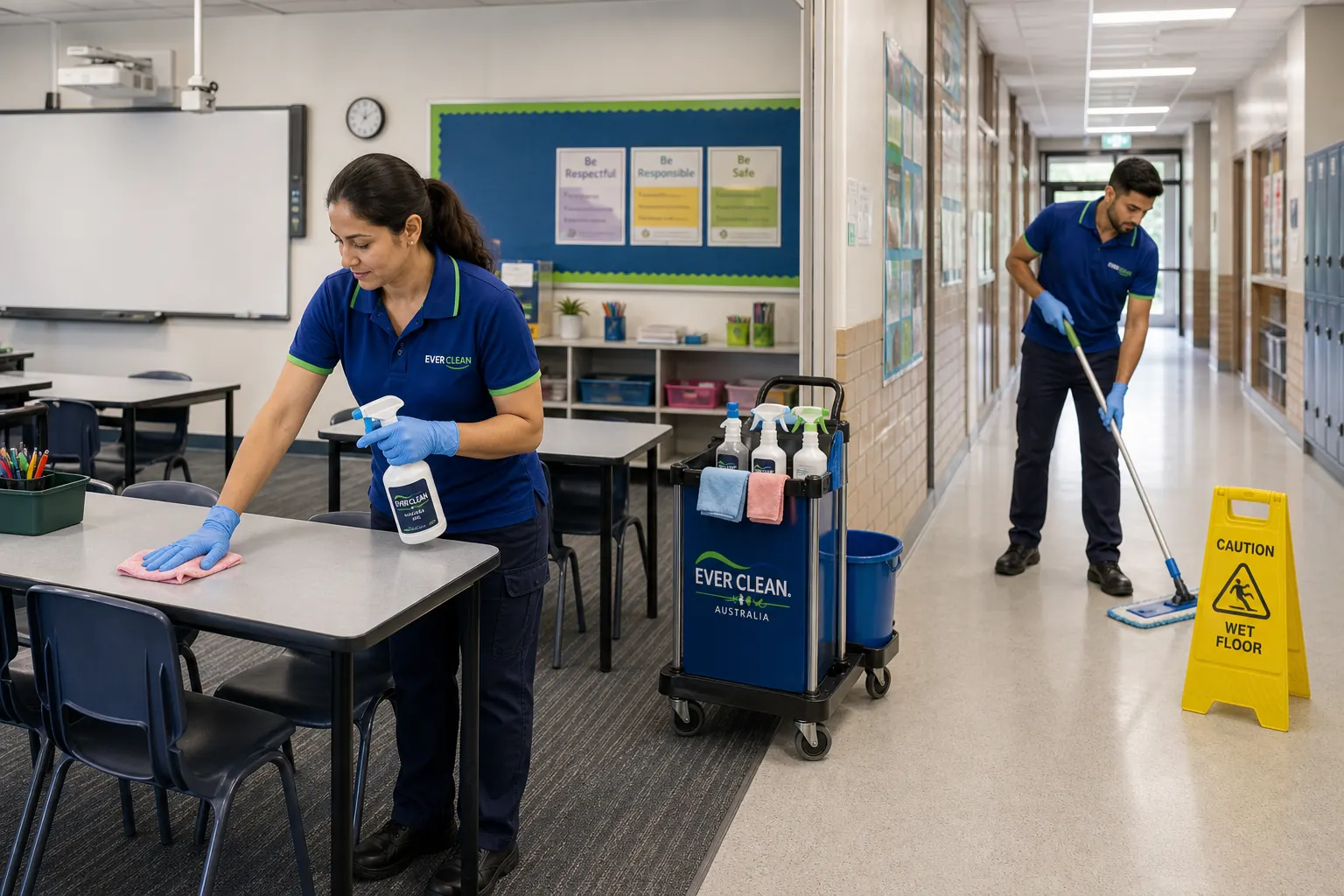
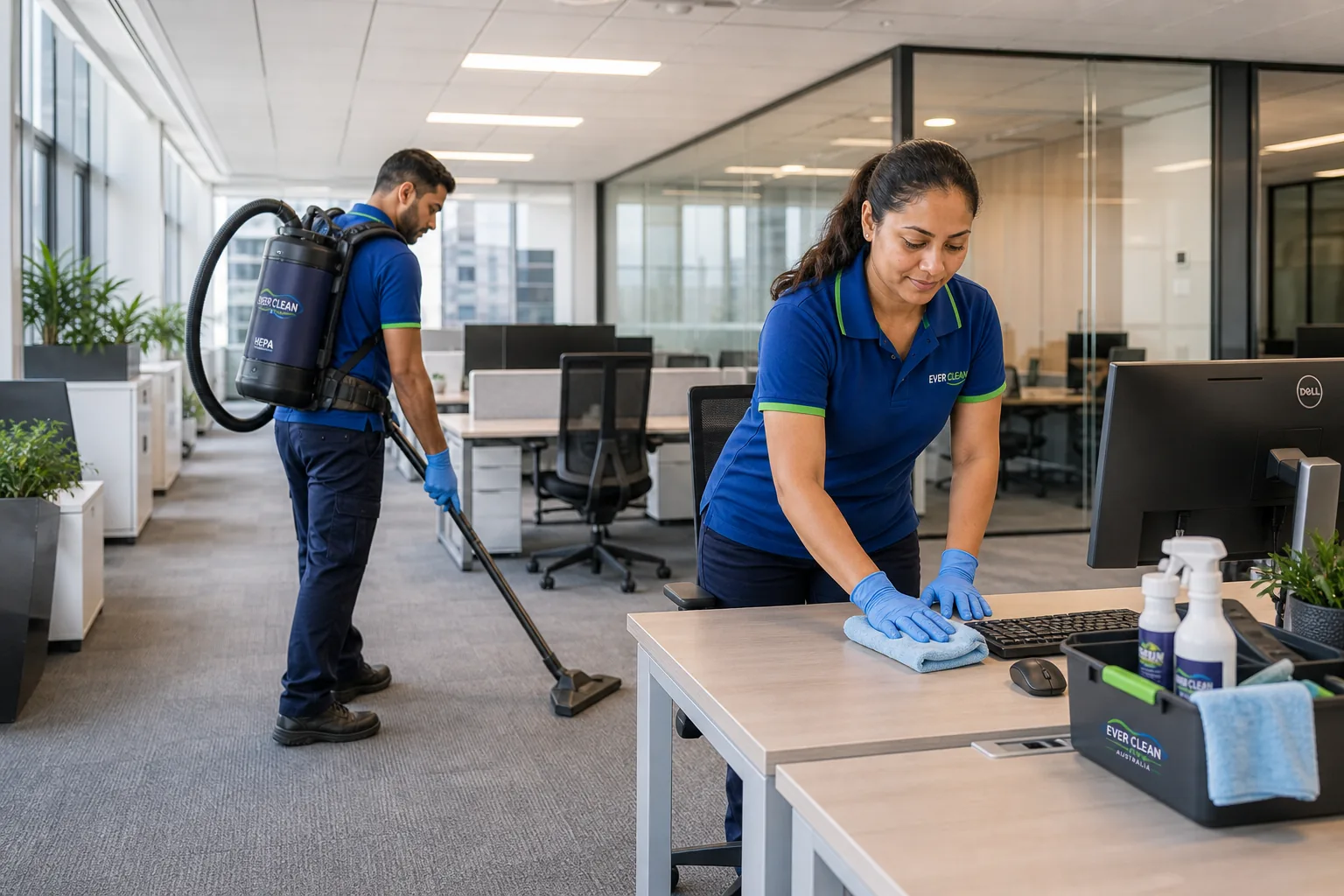
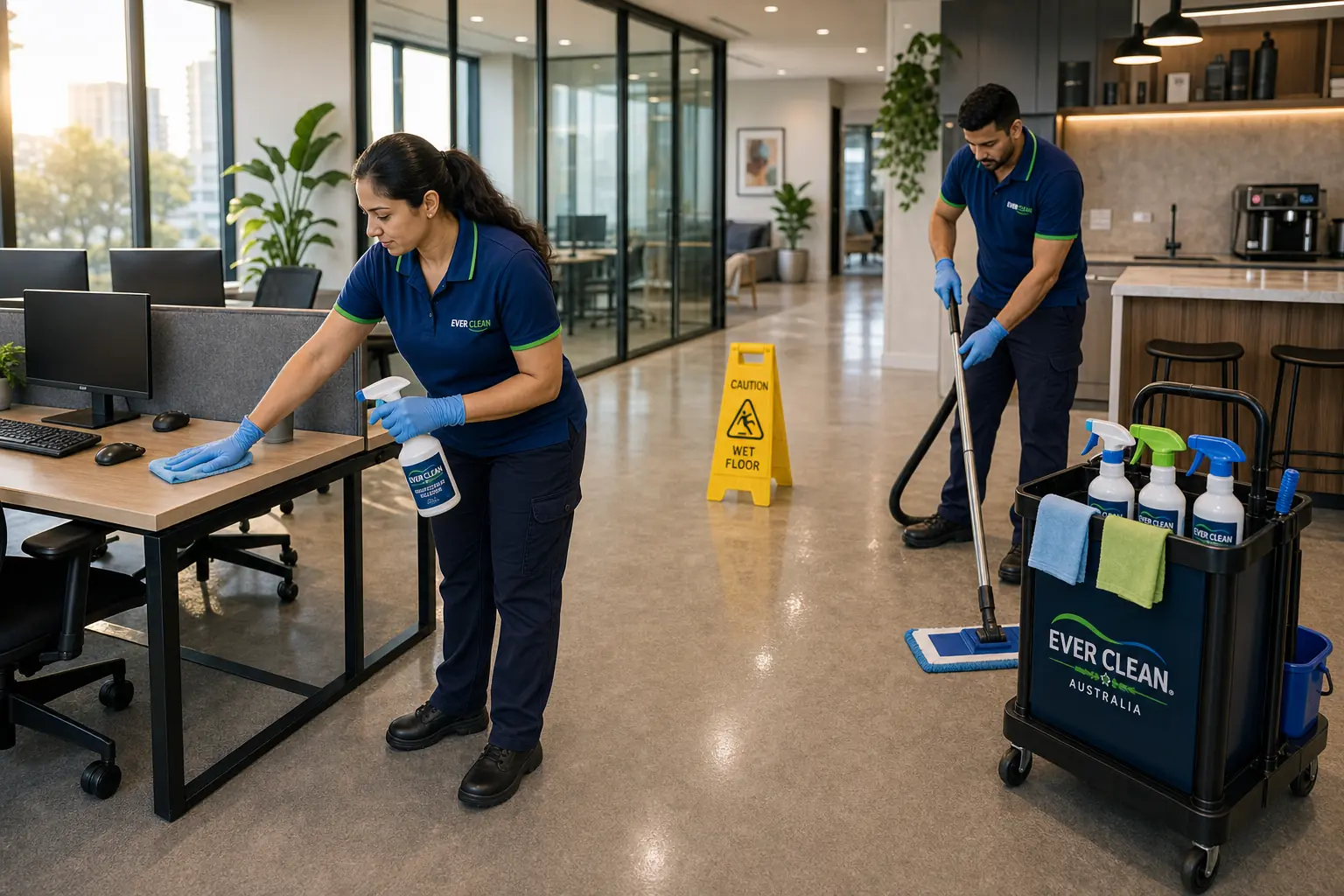
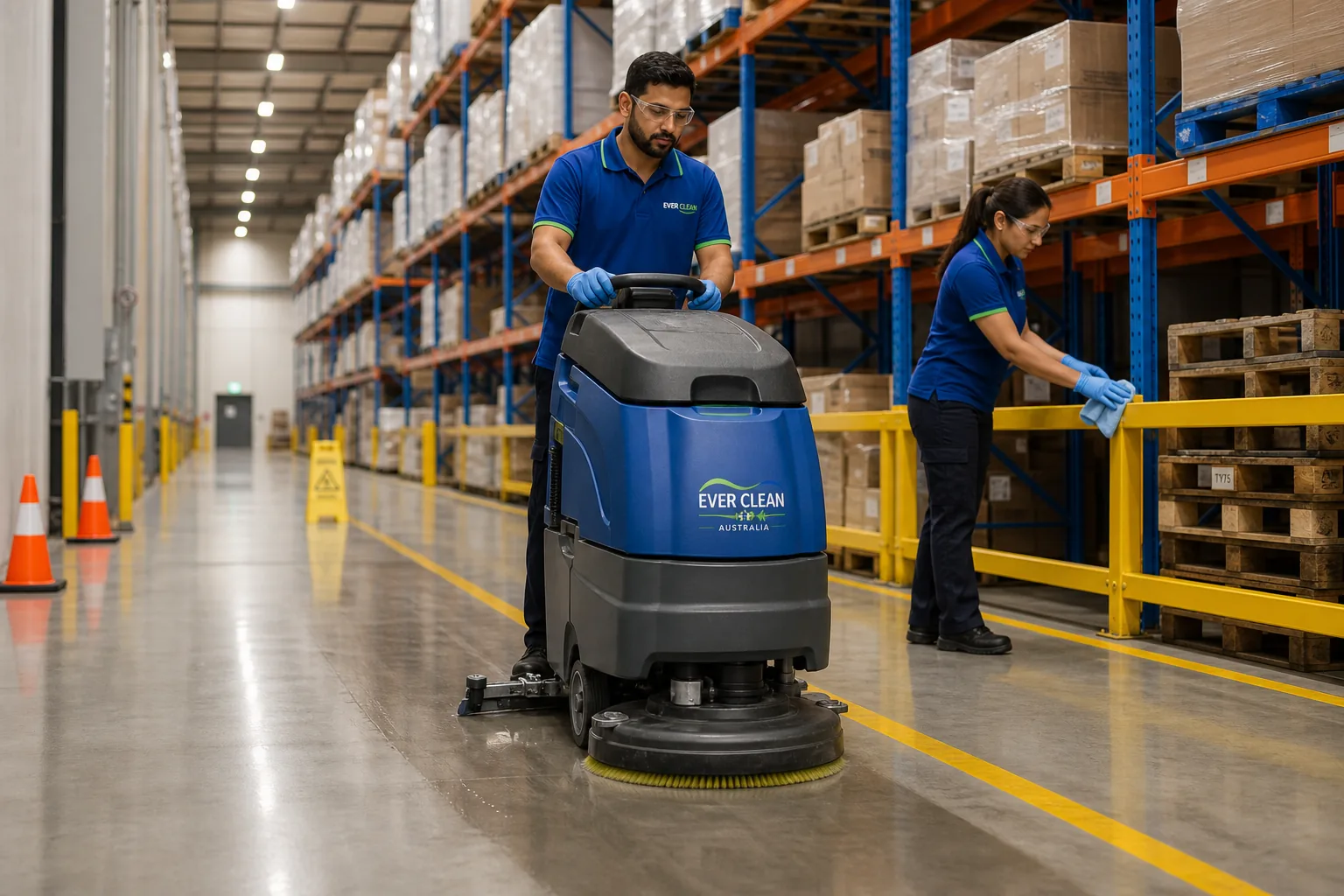
Choosing a school cleaning company in Sydney is different from choosing a cleaner for an office or a retail unit. Every contractor who sets foot on a school site is working around children, and NSW law, insurance conditions and school policy all treat that fact seriously. The sections below cover what a principal, business manager or P&C committee should expect from any school cleaning services Sydney provider — from Working With Children Checks through to how a term-time contract actually runs, room by room, and what changes when a gastro outbreak hits.
Working With Children Checks and contractor requirements
Under the Child Protection (Working with Children) Act 2012 (NSW), anyone engaged in "child-related work" — a category that includes cleaning staff who work in or around occupied school buildings — must hold a valid Working With Children Check (WWCC) before they start on site. This is not a discretionary extra a school cleaning company can skip to save time; it is a legal precondition, and a school is entitled to ask to see current clearance numbers for every individual rostered onto its site, not just a company-wide assurance.
In practice this means every cleaner allocated to a school contract should be WWCC-cleared and police-checked before their first shift, with clearance numbers kept on file and refreshed as required. A properly run school cleaning Sydney contract also includes a site induction for each new cleaner — covering evacuation procedures, chemical storage locations, out-of-bounds areas during school hours, and who to report to if something is found unattended or a maintenance issue is spotted.
Sign-in and identification matter just as much as the paperwork behind them. Cleaners working before, during or immediately after school hours should sign in at the office like any other visitor or contractor, wear visible identification, and be briefed on which areas are off-limits while students are present. Schools that outsource cleaning are effectively extending their duty of care to a third party, so a cleaning provider that cannot produce WWCC evidence on request, or that rotates unfamiliar staff onto a site without induction, is creating risk the school will ultimately carry.
- WWCC clearance required for every cleaner before their first shift on a school site
- Police checks and clearance numbers kept on file and available to the school on request
- Site induction covering evacuation routes, chemical storage and out-of-bounds areas
- Sign-in, visible ID and staff briefed on protocols for working around students
Term-time servicing vs holiday deep-clean cycles
A school cleaning contract runs on two very different rhythms, and a competent school cleaning company plans around both. During term, cleaning happens after the last bell or early before students arrive, and it is necessarily quick and targeted: bins emptied, floors swept and spot-mopped, toilets serviced and restocked, high-touch surfaces wiped down, and classrooms left tidy for the next day. Nightly servicing is about keeping a live, occupied building hygienic and presentable — it is not the moment for anything that needs a room to sit empty for hours.
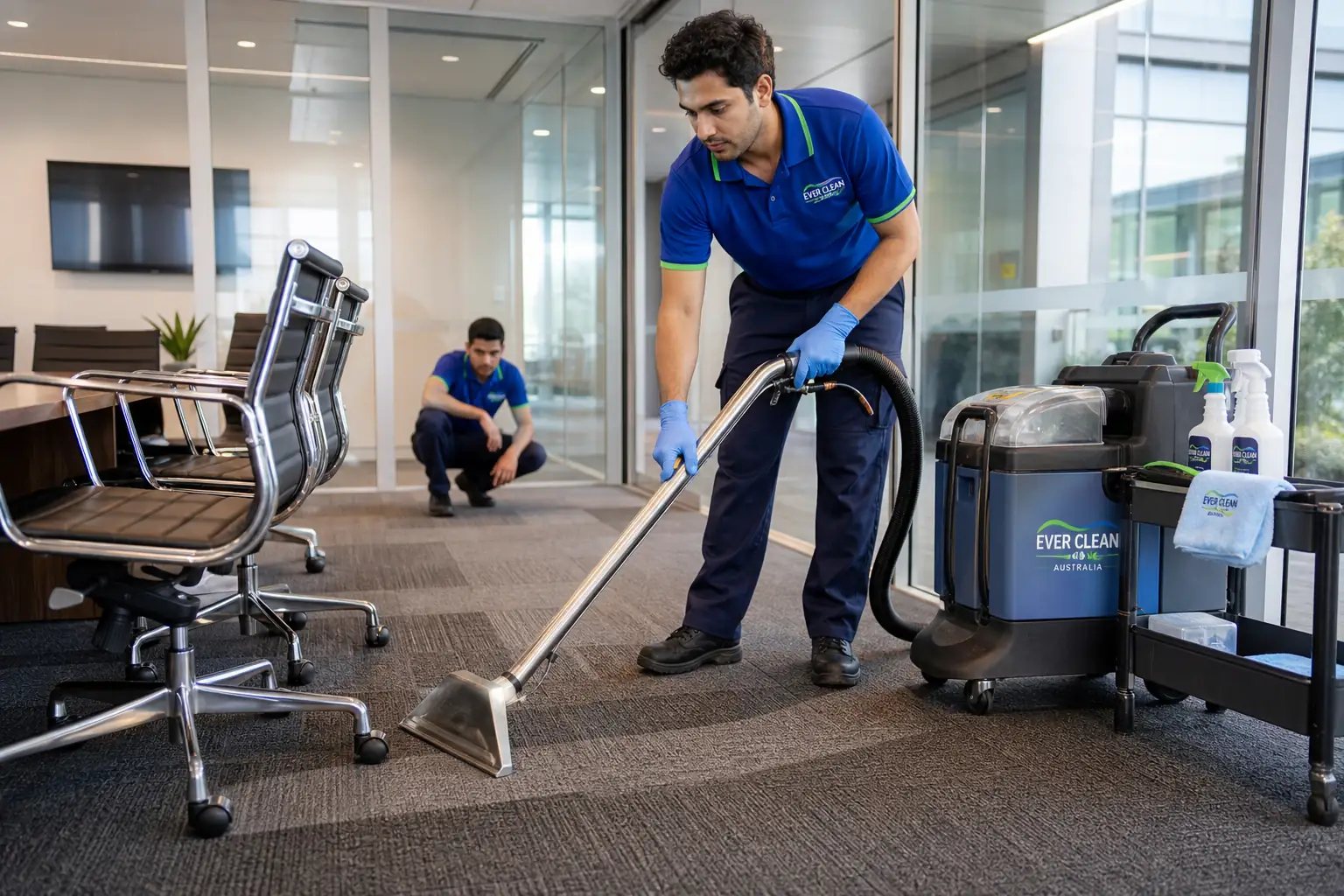
School holiday windows are where the deeper work happens, because they are the only time a classroom, hall or corridor can be taken fully out of use. That is when floor strip and seal work is scheduled on vinyl and hard flooring, carpet extraction is run through classrooms and libraries, high dusting reaches light fittings, ceiling vents and the tops of cupboards that nightly cleaning can never touch, and windows get a proper internal and external clean. Bathroom blocks also get a deeper treatment during holidays — descaling, grout work and drain servicing that a five-minute nightly visit cannot cover.
Getting this cycle right is largely a scheduling discipline: a school cleaning services Sydney provider should hand over a term calendar that maps nightly tasks against a holiday deep-clean plan, so nothing gets missed simply because there was never a large enough window to do it in during term.
- Term time: nightly bin, floor, toilet and high-touch surface servicing around occupied classrooms
- Holiday periods: floor strip and seal, carpet extraction, high dusting, window cleaning
- Deep bathroom descaling, grout and drain work scheduled for holiday windows
- A written term calendar so nightly and holiday tasks are planned, not improvised
Classrooms, libraries and staff rooms
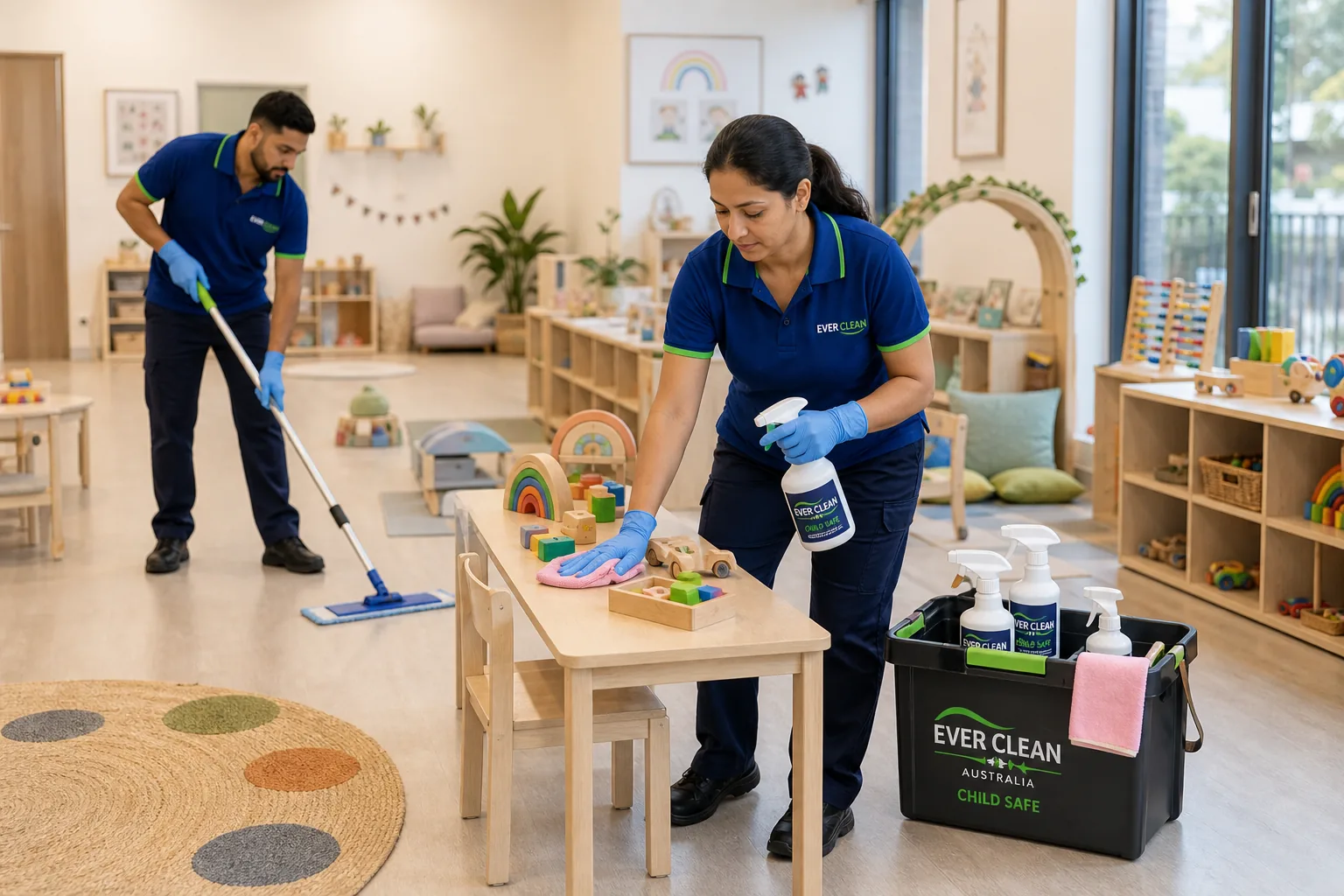
Classrooms carry the heaviest daily contact of any space in a school, and classroom cleaning needs to reflect that. Desks, chair backs, door handles, light switches and shared equipment are wiped as high-touch surfaces every service, not just when visibly dirty. Whiteboards are cleaned without leaving residue that ghosts through the next lesson, and technology — interactive panels, keyboards, shared devices and chargers — is cleaned with products safe for electronics, since the wrong spray or an over-wet cloth can damage equipment schools rely on daily.
Cleaning around student work is a smaller point but one that matters to teachers: work left out on desks, art left drying, or a science experiment mid-way through should be left alone and cleaned around, not tidied away or binned by a cleaner working through a room quickly. A good handover note between the school and its cleaning contractor covers this explicitly so nothing gets disturbed by accident.
Libraries need a lighter touch on shelving and a heavier one on communal furniture — beanbags, reading corners and shared tables see constant use and benefit from the same high-touch attention as classrooms. Staff rooms sit somewhere between an office and a kitchen: benches, microwaves, fridge handles, kettles and shared crockery areas need food-safe cleaning, and rubbish and recycling need to be cleared daily rather than left to build up over a long week.
- High-touch surfaces — desks, door handles, light switches — wiped every service
- Whiteboards cleaned without residue; devices and technology cleaned with electronics-safe products
- Student work and in-progress projects left undisturbed, per handover instructions
- Staff room kitchens cleaned to food-safe standard with daily rubbish and recycling removal
Canteens and food preparation areas
A school canteen is a food business operating on school grounds, and it is cleaned to that standard rather than treated as an extension of general classroom cleaning. Servery counters, preparation surfaces and equipment need degreasing on a schedule that matches how heavily the canteen is used, not just a wipe-down at the end of the day. Cool rooms and fridges are cleaned and checked for spills or residue that can harbour bacteria, and floors around fryers, ovens and prep stations get particular attention because grease build-up in a food area is both a hygiene issue and a slip hazard.
Allergen awareness is part of the brief too. Canteen staff manage allergen separation as a matter of course, and the cleaning routine needs to support that rather than undermine it — using separate or freshly laundered cloths between areas, and not cross-contaminating a nut-free prep zone with equipment used elsewhere. A school cleaning company working in a canteen should be briefed on the school's food safety plan so cleaning schedules and food handling protocols line up rather than working against each other.
- Servery and prep surfaces degreased on a schedule matched to canteen usage
- Cool room, fridge and servery hygiene checked, not just surface-wiped
- Floors around cooking equipment cleaned to reduce grease-related slip risk
- Cleaning routines aligned with the canteen's allergen separation and food safety plan
Toilet blocks, change rooms and gymnasiums
Toilet blocks are consistently the highest-complaint area in any school, and they are usually where a cleaning contract is judged. Restocking — soap, paper towel or hand dryers, toilet paper — needs to be checked every service, not assumed to last until the next scheduled delivery, because a block that runs out mid-morning generates complaints fast. Odour control is as much about ventilation and drain maintenance as it is about product, and a block that smells clean only because of air freshener rather than because it is actually clean will not hold up under scrutiny.
Change rooms and gymnasiums bring their own demands. Sports mats, gym equipment and shared surfaces pick up sweat and bacteria quickly and need regular sanitising, not just a once-a-term wipe-down. Locker areas and benches need the same high-touch attention as classroom furniture, and floors in these spaces — often a mix of vinyl, rubber matting and tiled shower areas — need cleaning methods matched to each surface so they stay safe underfoot rather than slippery.
- Consumables checked and restocked at every service, not left to run out
- Odour control addressed through cleaning and drain maintenance, not masking product alone
- Sports mats and shared gym equipment sanitised on a regular, not occasional, basis
- Floor cleaning methods matched to vinyl, matting and tiled surfaces to manage slip risk
Gastroenteritis and outbreak response cleaning for schools
When a gastroenteritis or other outbreak moves through a school, the standard nightly routine is no longer enough, and a school cleaning services Sydney provider needs to be able to step up fast. Affected classrooms, toilet blocks or shared spaces are isolated and cleaned with hospital-grade disinfectant rather than standard products, with particular attention to high-touch surfaces — door handles, desks, taps and toilet fixtures — that carry the highest transmission risk. Cleaning cloths and equipment used in an affected area are kept separate from the rest of the site to avoid spreading contamination into unaffected rooms.
Turnaround matters as much as the products used. A school managing an outbreak needs an area cleaned and cleared quickly so it can be brought back into use, which means outbreak response has to be treated as a same-day priority rather than folded into the next scheduled visit. This is an area of school cleaning that surprisingly few providers in Sydney publish clear information about, despite it being one of the more urgent calls a business manager will ever need to make — most school cleaning company websites simply don't address it at all.
Because outbreak response sits outside the routine nightly and holiday cycle, it is worth confirming with any school cleaning company upfront: how quickly they can respond, what disinfectant standard they use, and how they isolate affected areas so an outbreak doesn't spread further while the school is trying to contain it.
- Affected areas isolated and cleaned with hospital-grade disinfectant, not standard product
- High-touch surfaces prioritised — door handles, desks, taps and toilet fixtures
- Separate cloths and equipment used in affected areas to prevent cross-contamination
- Same-day turnaround expected so affected spaces can safely return to use
If your school needs a compliant, WWCC-cleared school cleaning company for term-time servicing, holiday deep cleans or outbreak response, get in touch for a free quote 0485 017 800.